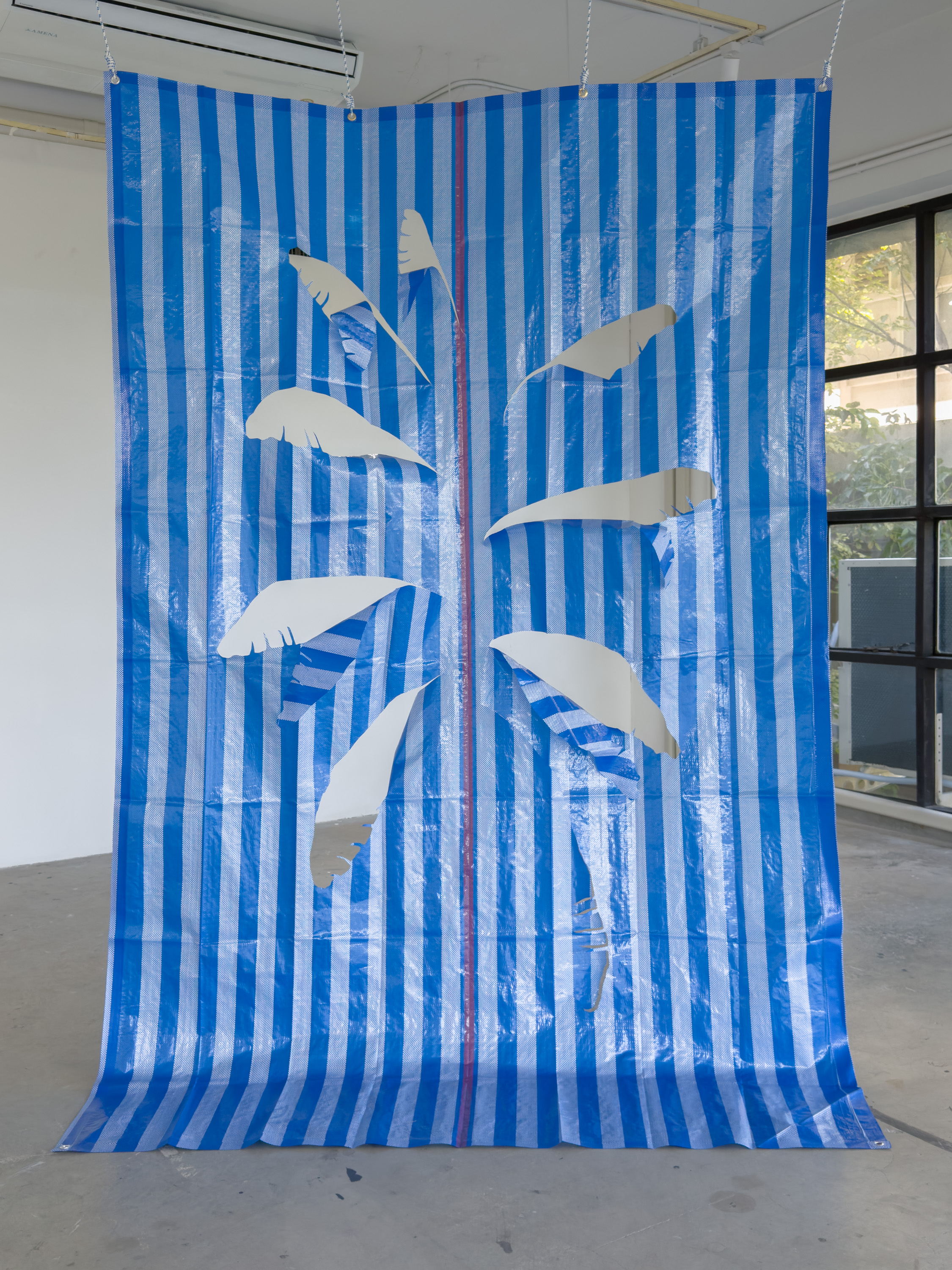
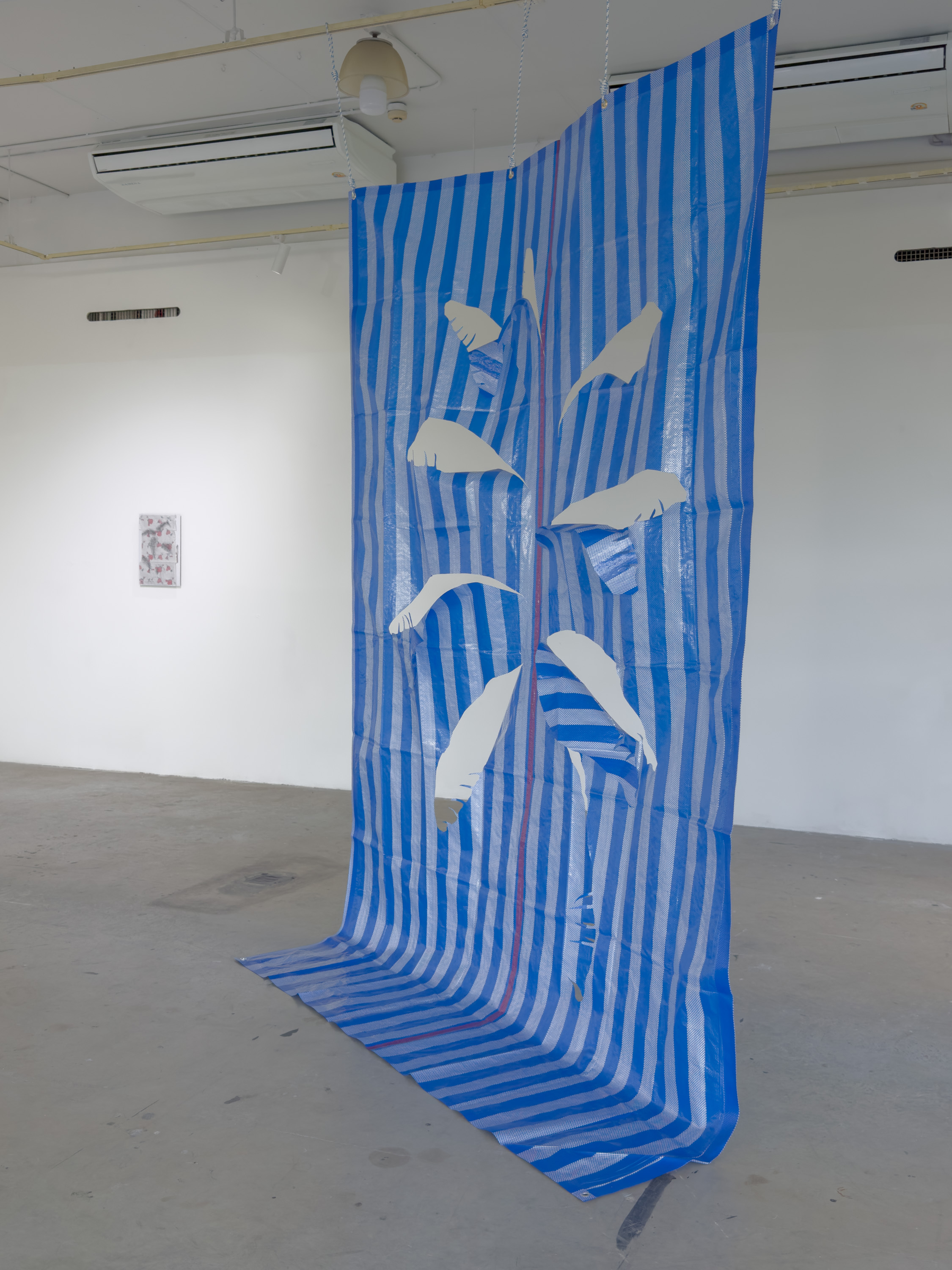
颯颯:裁穿一面石壁
Soughing: Cutting Open a Stone Wall
2025
帆布
Tarpaulin
Dimensions variable
帆布
Tarpaulin
Dimensions variable
藍白條紋帆布與香蕉樹,是我在此漸漸熟悉的日常景觀;而藍白條紋帆布與香蕉樹,也是來自台灣的我早已十分熟悉的物件與植物。儘管在語言上給予它們相同的稱呼,但它們實際上是如此的不同。不只在外觀、造型,或所處環境的差異,最根本的不同點,也許是我用一種作為外來的人的視角看待它們,像是戴了一副uncanny眼鏡,像也不像、是也不是。
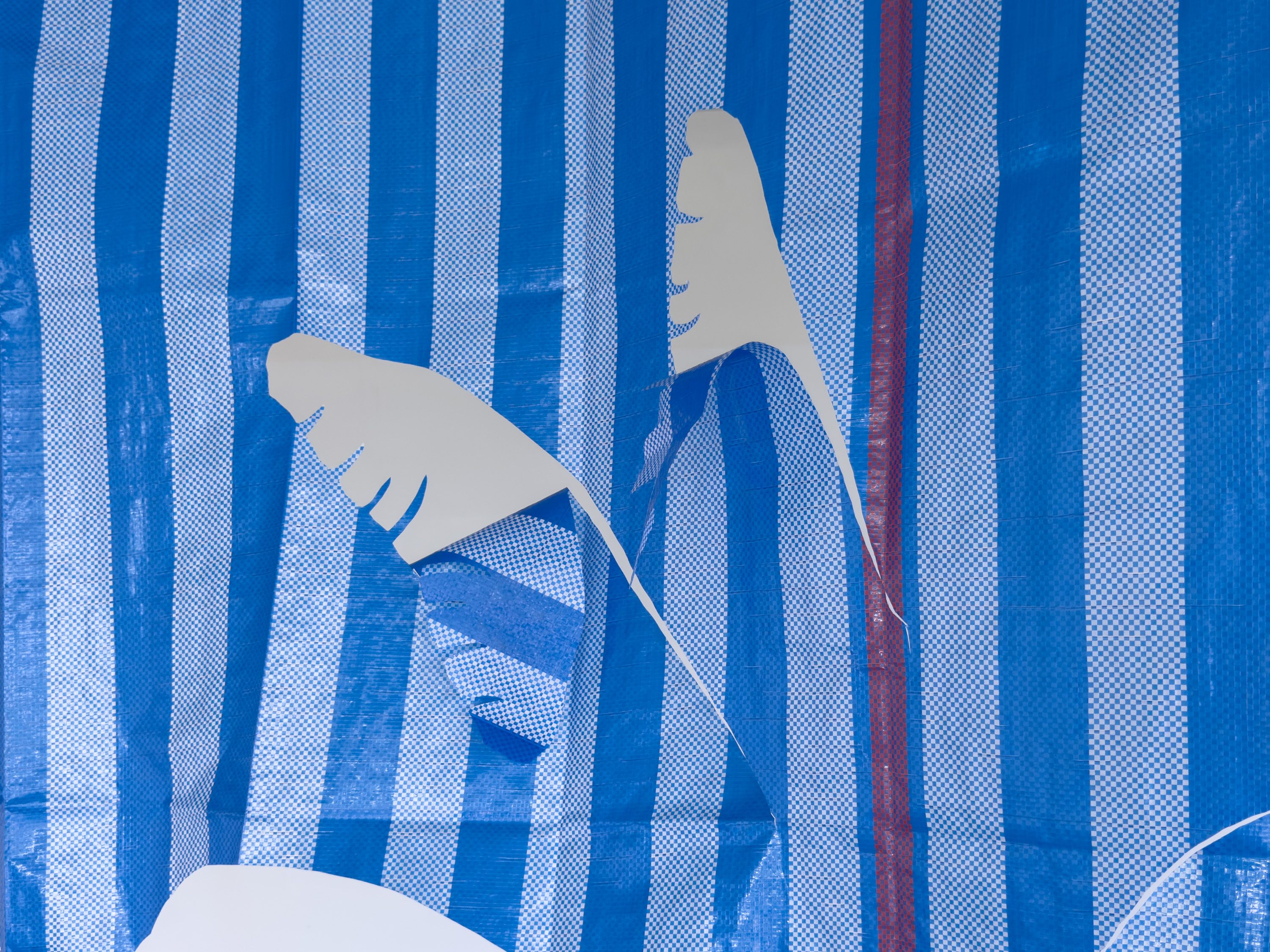
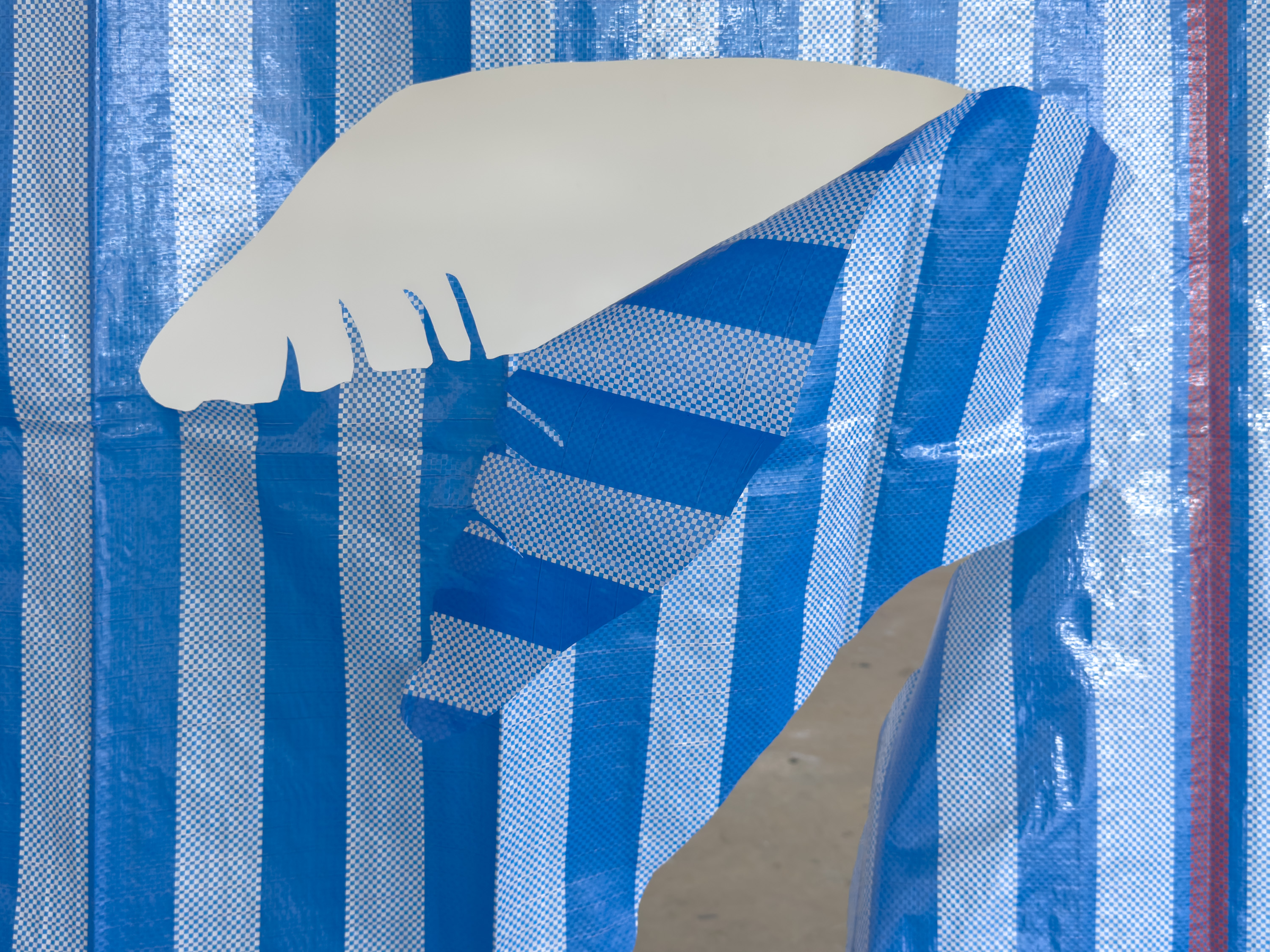
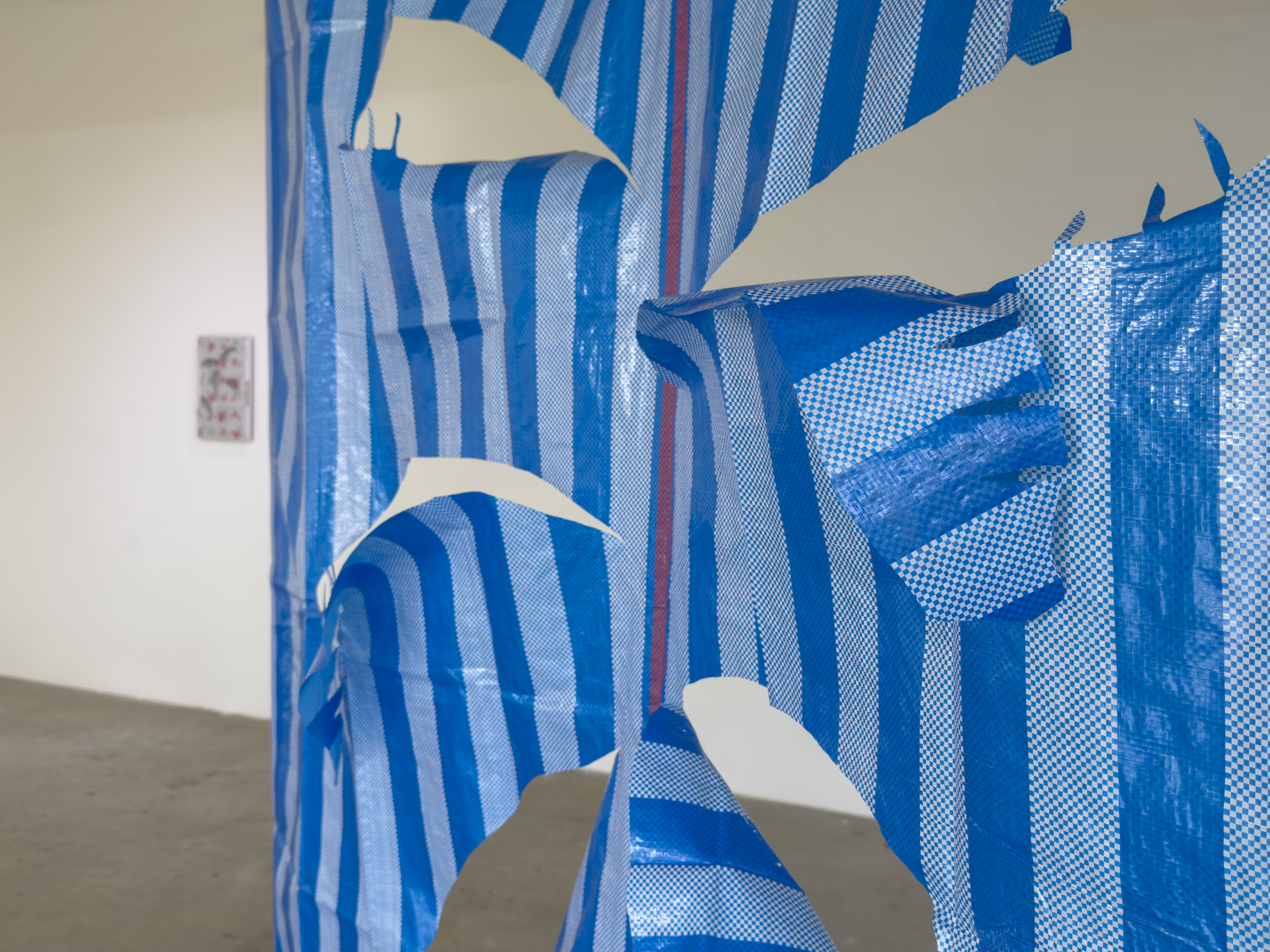
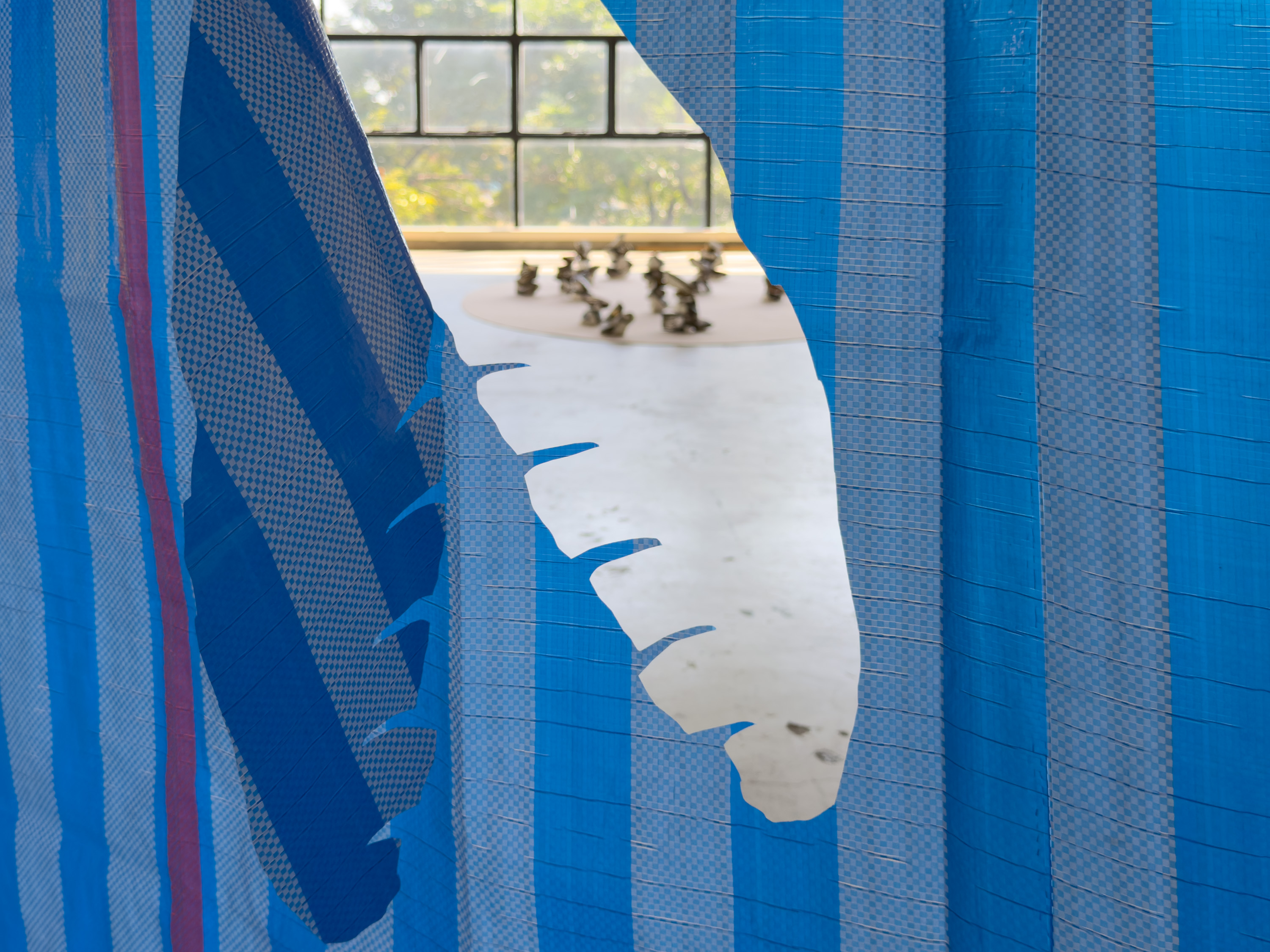
雄偉而黑暗的石窟,給予人們一種渾然天成的敬畏與靈感,於是便將神性賦予之上。前人順著岩石的紋理尋找佛影,石頭便從此成為神佛。語言因人的動作而抽換,空間也就此不只是自然風景。我在一片稱為藍白帆布的石壁上,未經草稿的剪裁出香蕉樹的輪廓。鏤空的是影子也是葉子的真身,而落下的是影子也是葉子的真身。在人工物中、在自己的動作之中,我也想要找到靈感的起源。
The blue-and-white tarpaulin and the banana trees are the everyday sights I’ve gradually grown familiar with here; yet they are also objects and plants I have long known well in Taiwan. Even though we call them by the same names, they are in fact profoundly different. Beyond their appearance, form, and environment, the most fundamental difference may lie in the way I see them—as someone from elsewhere—as if looking through a pair of uncanny lenses, where things are both like and unlike themselves, both what they are and not quite what they are.
The grand and shadowed caves evoke in people a natural sense of reverence and spiritual attunement, and thus divinity is placed upon them. Those before us searched for traces of the Buddha by following the veins of the rock, and the stone, in turn, became sacred. Language shifts through human gestures, and space becomes more than a natural landscape. Upon a stone wall that I call “blue-and-white tarpaulin,” I cut out the silhouette of a banana tree with freehand cuts. What becomes hollowed is both its shadow and its true form; what falls away is also its shadow and its true form. Within these man-made materials and within the movements of my own hands, I, too, seek the origins of that spiritual prompting.
雄偉而黑暗的石窟,給予人們一種渾然天成的敬畏與靈感,於是便將神性賦予之上。前人順著岩石的紋理尋找佛影,石頭便從此成為神佛。語言因人的動作而抽換,空間也就此不只是自然風景。我在一片稱為藍白帆布的石壁上,未經草稿的剪裁出香蕉樹的輪廓。鏤空的是影子也是葉子的真身,而落下的是影子也是葉子的真身。在人工物中、在自己的動作之中,我也想要找到靈感的起源。
The blue-and-white tarpaulin and the banana trees are the everyday sights I’ve gradually grown familiar with here; yet they are also objects and plants I have long known well in Taiwan. Even though we call them by the same names, they are in fact profoundly different. Beyond their appearance, form, and environment, the most fundamental difference may lie in the way I see them—as someone from elsewhere—as if looking through a pair of uncanny lenses, where things are both like and unlike themselves, both what they are and not quite what they are.
The grand and shadowed caves evoke in people a natural sense of reverence and spiritual attunement, and thus divinity is placed upon them. Those before us searched for traces of the Buddha by following the veins of the rock, and the stone, in turn, became sacred. Language shifts through human gestures, and space becomes more than a natural landscape. Upon a stone wall that I call “blue-and-white tarpaulin,” I cut out the silhouette of a banana tree with freehand cuts. What becomes hollowed is both its shadow and its true form; what falls away is also its shadow and its true form. Within these man-made materials and within the movements of my own hands, I, too, seek the origins of that spiritual prompting.
Copyright
© 2016 - 2026 劉書妤 Shu-yu Liu